Friction, Sliding, and the Cost of Changing Direction
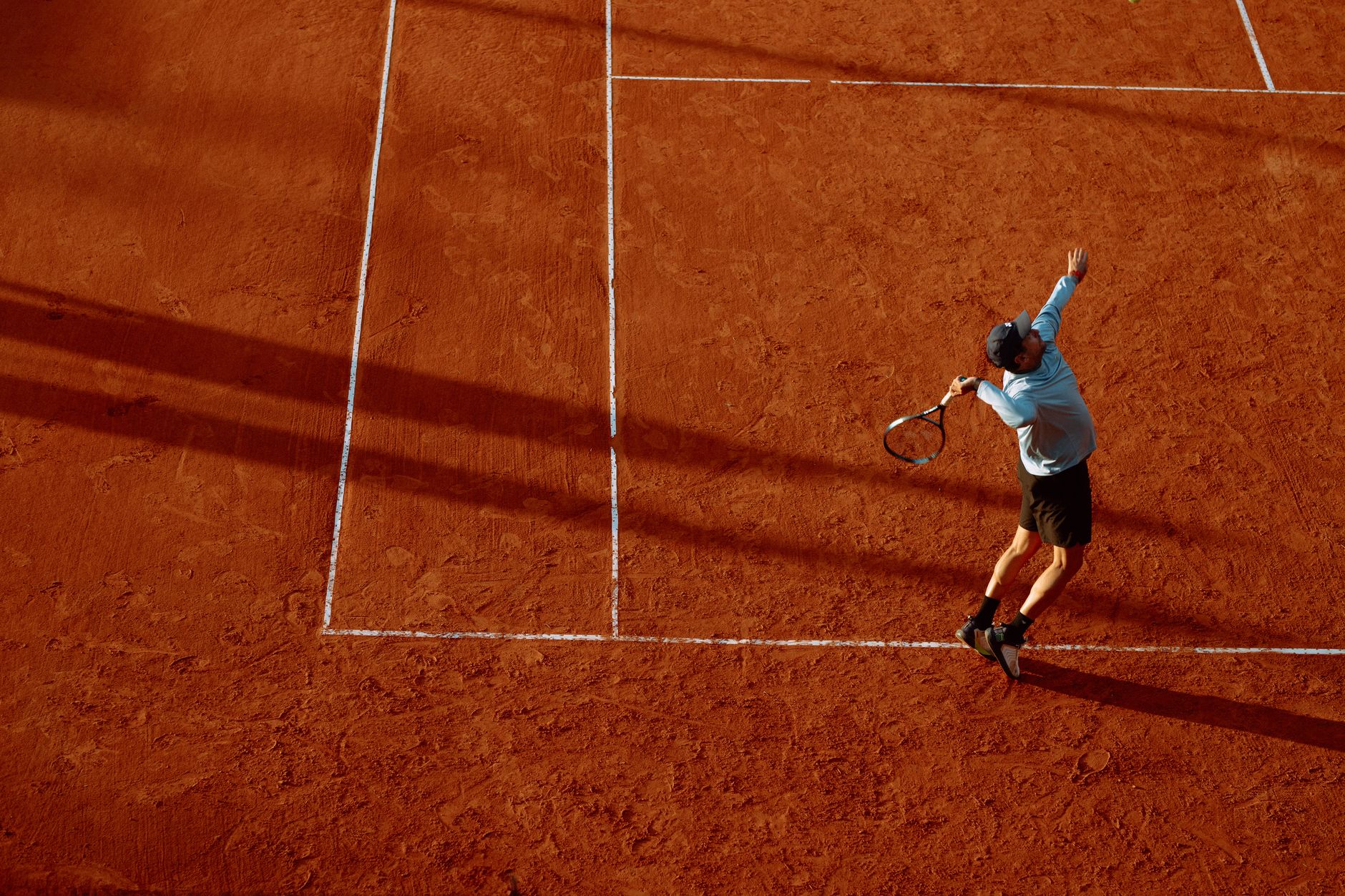
The loose top layer of clay makes controlled sliding possible. A player can arrive at a wide ball, let the foot shear through the surface and spread the deceleration over a distance rather than absorbing it in one impact. That reduces the peak load the body takes and allows the recovery movement to begin during the slide itself. It is also a learned skill, which is why players who did not grow up on clay often defend its corners less efficiently than their movement elsewhere suggests.
Hard courts grip. Stops are abrupt, the change of direction happens over a short distance, and the force that clay dissipates through the ground is instead absorbed by joints and tendons, which is why the surface is generally considered the most demanding on the body over a long season. Grass poses a different problem again: the footing is slick but the ground is firm, so a player cannot slide with control and cannot fully trust the plant either. The response is shorter steps, a lower centre of gravity and more caution in the worn areas, all of which restrict how aggressively a player can commit to reaching a ball.