What the Build Does to the Bounce
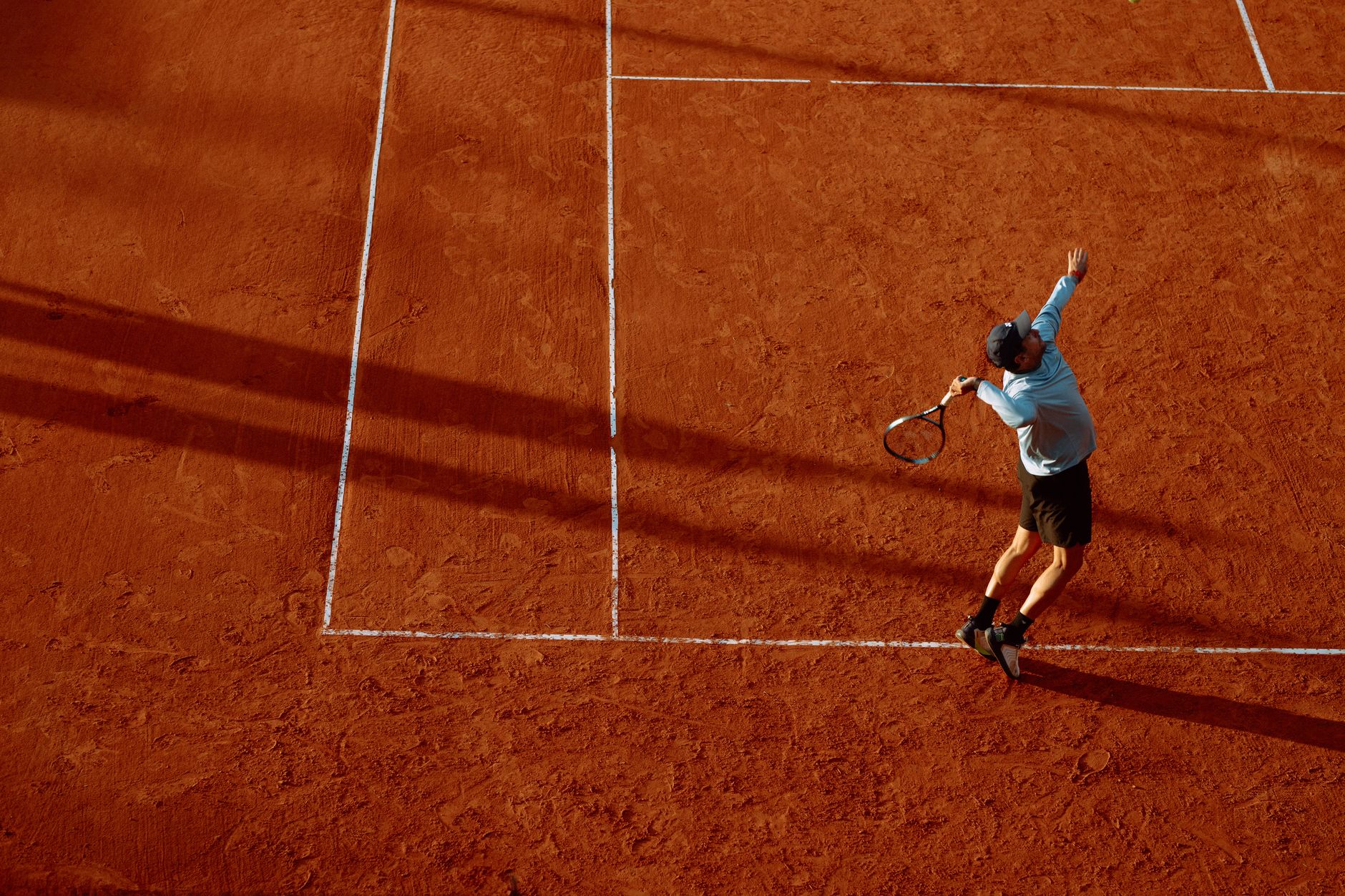
On clay, the ball meets a deformable layer. It digs in slightly, loses more energy in the contact, and the granules grip the ball's surface, so spin translates efficiently into a change of direction. The result is a bounce that sits higher and arrives later, and a court where heavy topspin becomes a genuine weapon rather than a means of control.
Grass is firm and slick, so the ball skids rather than bites. The bounce stays low, the ball keeps more of its pace through the contact and spin has less to grip, which means slices and flat drives stay unpleasantly low. Grass is also the least uniform surface, because wear patterns develop where players stand and turn, so late in an event the bounce carries a degree of genuine unpredictability. Hard courts sit between the two in bounce height, but their defining quality is not position on that scale. It is consistency: the ball does very nearly the same thing every time, which is why the surface is the standard for development and for most of the calendar.