How electronic line calling pushed line judges off the tennis tour

· October 15, 2026 · 6 min read

A tennis match in 2025 on the ATP Tour had one official on the court. The chair umpire still sat above the net, but the people who used to crouch at the baselines and sidelines were gone, replaced by cameras, an automated voice and a review official in a booth. The change was announced two years in advance and took effect across every tour-level event, on every surface, in the same season.

It did not happen all at once. The system was trialled in 2017 at a tournament for players under 21, adopted tournament by tournament during the pandemic years, made mandatory for men's events from 2025, and brought to clay by the WTA that spring. One Grand Slam did not follow, and the reasons on both sides say a lot about what the technology does and what it does not yet publish.

From a Milan trial to a tour-wide rule

The first live system ran at the 2017 Next Gen ATP Finals in Milan. The ATP's press release of September 18, 2017 described it as a world first: live electronic line calling on all lines during all points, with the chair umpire as the only official on court. The system would make an instant automated "OUT" call, the challenge procedure was switched off because every call was final, and foot faults were handled by a review official watching cameras trained on the baseline and centre line.

Gayle David Bradshaw, then the ATP's executive vice president for rules and competition, called it a possible "landmark moment for officiating in our sport" and described it as a trial to be monitored. For several seasons afterwards, tournaments could choose between live calling, the older review-and-challenge format and human line judges.

The decision to end that mix came on April 28, 2023, when the ATP announced tour-wide adoption from 2025. The stated basis was research across tennis stakeholders, including fans, which ranked accuracy and consistency as the most important criteria for a line-calling system. ATP chairman Andrea Gaudenzi said the sport "deserves the most accurate form of officiating." The release also pointed to a second motive: full-tour ball and player tracking would generate data for new statistics, developed with Tennis Data Innovations.

What the system does during a match

What the system does during a match

The core function is narrow. Live electronic line calling covers every line on the court for "out" calls throughout the match, and the ATP's February 2025 update on officiating confirmed that all tour-level events on all surfaces were by then using it. The 2023 release had noted that suppliers were approved for hard courts and grass, with final testing underway on clay.

There is still a human in the loop. The 2025 WTA Official Rulebook requires the tour's officiating department to designate at least one experienced, certified review official, holding a minimum Bronze Badge, at any tournament using an electronic line calling system, with at least one per court equipped with the system and more where night sessions stretch the schedule. That person does not call lines; the job is to oversee the system.

The ATP has layered a separate tool on top. Video Review was introduced on every court at all nine Masters 1000 events in 2025, starting at Indian Wells in March, and it lets the chair umpire check not-up calls, foul shots, touches, hindrances, scoring errors and possible default situations. The ATP's January 2026 season announcement said it would extend to all courts at ATP 500 events in 2026 and to ATP 250 events in 2027, while live line calling continues at every tour event.

Clay was the last surface to be solved

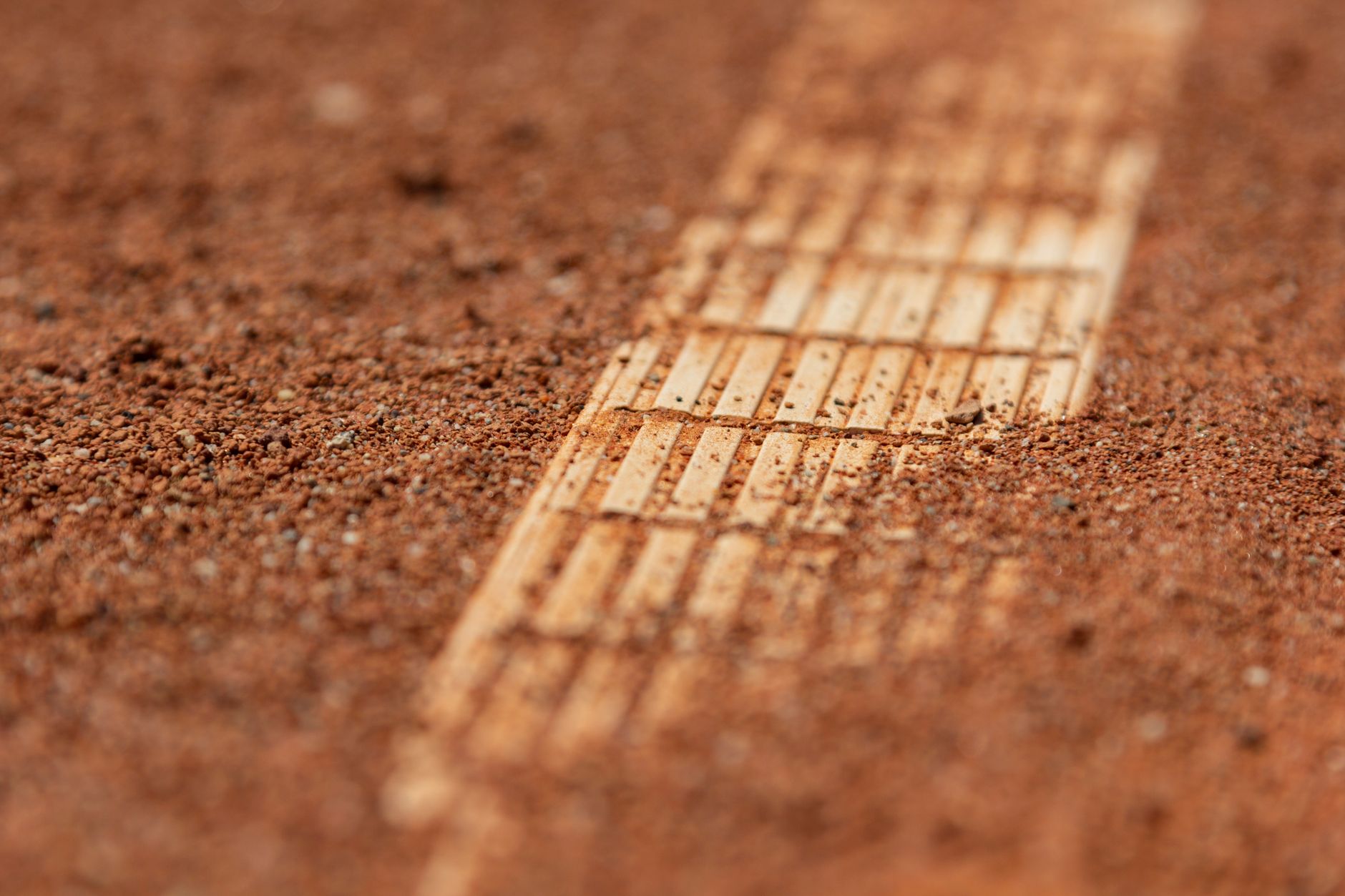
Clay complicated the rollout because the surface leaves a mark, and checking that mark was the one line-call procedure umpires could perform themselves. Hawk-Eye's own site describes the company as the first provider approved on all surfaces.

The WTA's first clay event with live calling was the Credit One Charleston Open of March 29 to April 6, 2025, covering qualifying and main draw. The tour's announcement quoted tournament director Bob Moran calling it "a major milestone, not just for Charleston but for all clay tournaments," and said the Madrid and Rome WTA 1000 events would follow later in the season. Fabrice Chouquet, the WTA's senior vice president for competition and on-site operations, framed the system as an officiating aid that "guarantees consistency and full accuracy on line calling" and reduces interruptions.

Wimbledon's decision came earlier, on October 9, 2024, and covered all main draw and qualifying courts from the 2025 Championships. According to the ATP's report, the All England Club took the step after testing during the 2024 tournament, and chief executive Sally Bolton said "the time is right" following a significant period of consideration and consultation, adding that players would get the same conditions they had at a number of other events on tour.

What is published about accuracy, and what is not

Readers looking for a millimetre figure will not find one in any of the official announcements. The ATP's justification is the stakeholder research that ranked accuracy and consistency first; it does not attach a measured error margin. Hawk-Eye's retrospective on two decades of work with the ATP dates the challenge system's debut to the 2006 Miami Masters and the live system to 2017, speaks of matches decided by "fractions of a millimeter," and says absolute accuracy is now treated as a baseline requirement, but it does not quantify that baseline either.

What the Hawk-Eye piece does offer is a view on how trust was built. Ali Nili, the ATP's vice president of officiating administration and technology, said that "consistency of use and in-match experience is what gained trust in the system," and acknowledged that any significant change brings a level of skepticism. The company's homepage puts its tennis footprint at more than 10,000 court days, 450 courts and 100 events, and identifies Hawk-Eye as a Sony company.

The honest summary is that the accuracy case rests on the approval process and the tours' operational experience rather than on any published error statistics, and players know it. In Paris in June 2025, Madison Keys told the WTA that electronic calling "has a margin for error" and that she did not yet know where she stood.

Roland Garros and the mark on the clay

The French Open kept its line judges in 2025. The WTA's June 4, 2025 feature quoted French Tennis Federation president Gilles Moretton: "For Roland Garros, we want to keep our linesmen as long as the players agree with that." The piece noted that the Australian Open had adopted electronic calling in 2021 and the US Open in 2022, leaving Paris as the only major still relying on human line calls.

The same week produced the example that both camps cite. In the fourth round against Elena Rybakina, with the third set at 4-4 and Rybakina facing break point, her second serve was called out and Iga Swiatek began walking to her chair expecting to serve for the match. Chair umpire Kader Nouni was unsure of the call, climbed down, inspected the mark and ruled that the ball had clipped the service line, so Rybakina was given a first serve and rallied from 15-40 to take the lead. Swiatek said afterwards that "it wasn't such a big deal for me" and that she refocused immediately.

Coco Gauff's position captured the tour's view: if the technology exists, it should be used, but she respected the tournament's decision. For the umpire in Paris, the mark on the clay is physical evidence that can be inspected in front of both players; on a hard court there is no equivalent, which is one reason the hard-court majors moved first.

For anyone watching a match in 2026, the practical change is in what counts as a disputed point. Line calls at tour events are final the moment the automated voice speaks, so the arguments that remain are about touches, double bounces and hindrances, which is the territory Video Review is being extended to cover.

Football went through a related debate with its offside technology, and the way semi-automated offside works shows the same pattern: automation of the measurement, with a human retained for the judgment calls the measurement cannot settle.