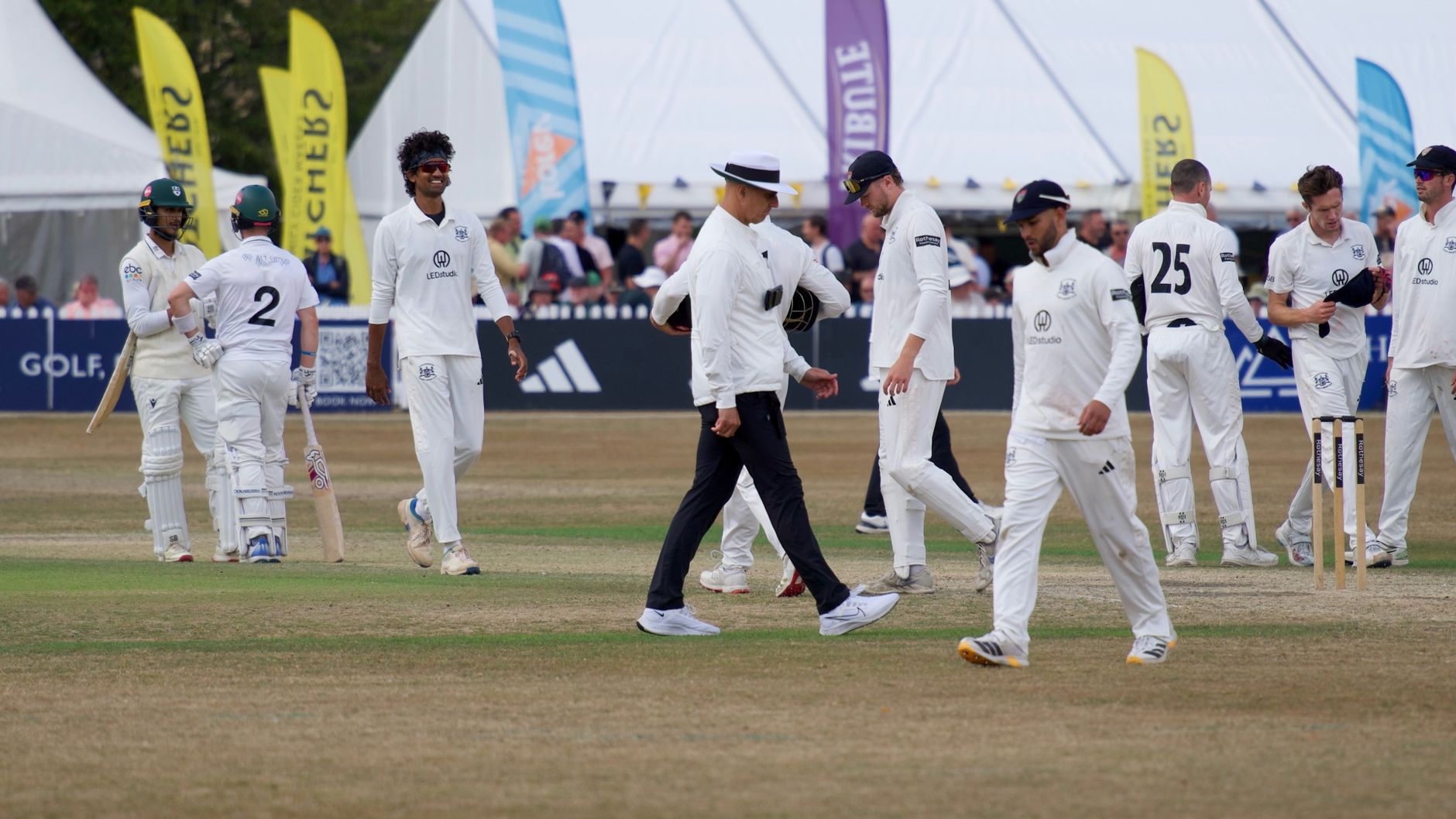
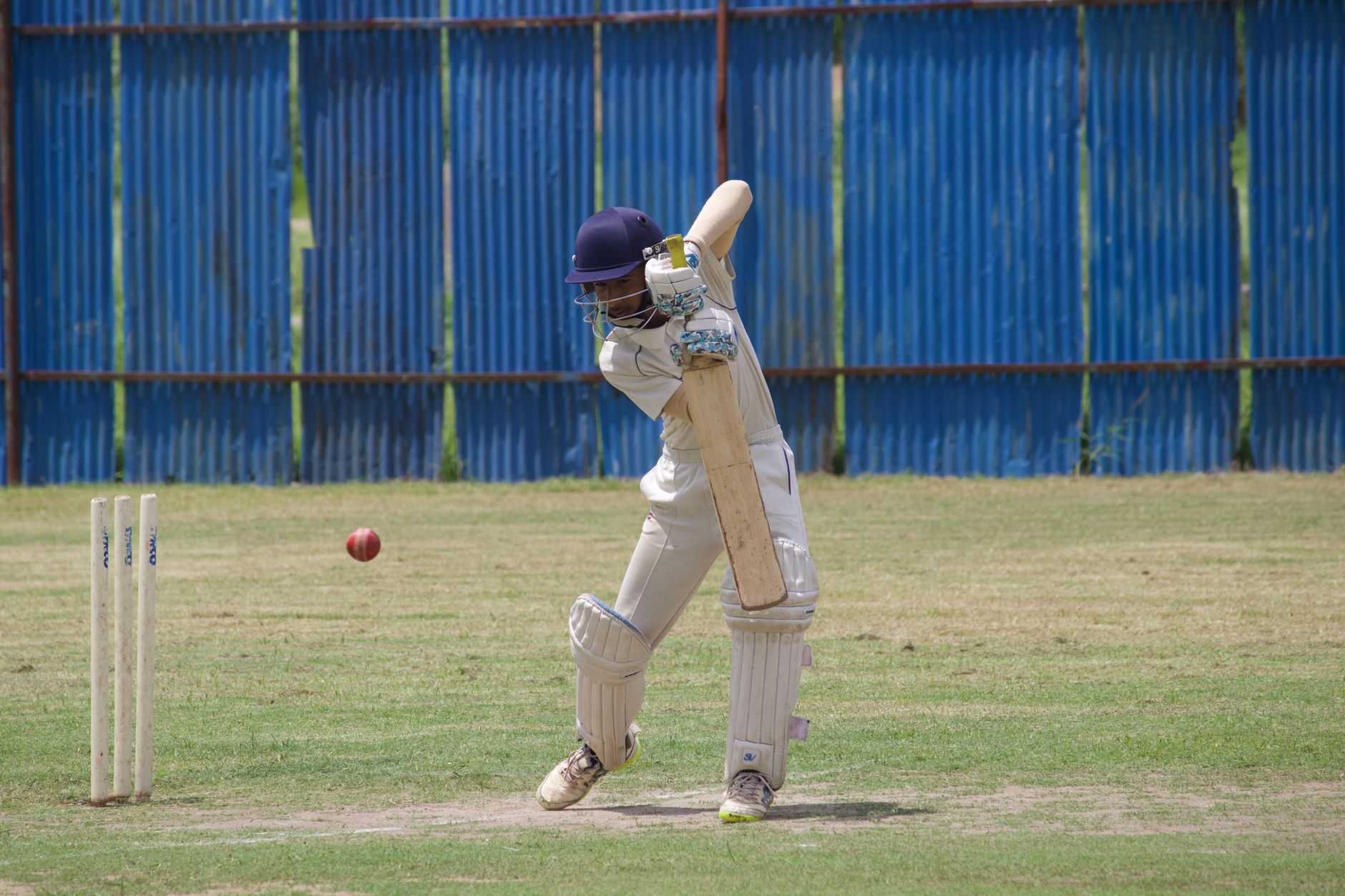
How cricket's Decision Review System actually decides an lbw

· October 15, 2026 · 7 min read

A bowler roars, the umpire shakes his head, and the captain forms a T with his forearms. What happens in the next two minutes is governed by a written protocol that runs to several pages of the ICC's playing conditions. The Decision Review System is one of the most argued-about pieces of officiating technology in any sport, and most of the arguments come from people who have not read the rules it follows.

This piece walks through the current protocol as the ICC publishes it: who may ask for a review, how long they have, what the ball-tracking cameras are allowed to say, where umpire's call begins and ends, and how the review budget is counted. The interesting part is the set of judgment calls the rulebook deliberately leaves to a human.

Fifteen seconds and a T sign

The current ICC Men's Test Match Playing Conditions, effective from October 2026, set out the Decision Review System in Appendix D. A Player Review can be requested for any decision about whether a batter is dismissed, except Timed Out. Only the batter given out may challenge an out decision, and only the fielding captain may challenge a not out decision.

The clock matters. Paragraph 3.2.2 allows no more than 15 seconds between the ball becoming dead and the request, with a prompt from the bowler's end umpire at 10 seconds; a late T sign is declined and a request cannot be withdrawn. Players may consult each other on the field, but umpires may refuse a review if they believe signals have come from off it. One question is allowed first: on an lbw appeal, the players may ask whether the decision rested on the striker making no genuine attempt to play the ball with the bat, because that answer changes how the ball-tracking output is read.

Three pieces of information from the cameras

Three pieces of information from the cameras

When an lbw is reviewed, the third umpire first checks that the delivery was fair and whether the ball touched the bat. If the batter is still eligible to be out, the ball-tracking technology must present exactly three things: where the ball landed, where it first struck the batter, and whether it would have hit the stumps. The playing conditions name the approved providers: ball tracking from HawkEye (HawkEye Innovations) or VirtualEye (ARL); sound-based edge detection from Real-Time Snickometer (BBG Sports) or UltraEdge (HawkEye Innovations); heat-based edge detection from Hot Spot cameras (BBG Sports); and Zing LED wickets. The minimum for DRS to run at all is approved ball tracking plus sound-based edge detection.

Hawk-Eye dates its cricket work to 2001 and says it now covers more than 1,000 match days a year across 15 countries. The system reconstructs the ball's path from camera frames and projects it forward, which is why its lbw output is a prediction rather than a measurement. Harry Collins, a Cardiff University professor who has studied the technology since 2008, wrote in The Conversation that the company has claimed an average error of 3.6 mm, later revised to 2.2 mm, and that averages conceal larger individual errors. The ICC's protocol is built around that uncertainty.

Where umpire's call begins and ends

Clause 5.10 defines umpire's call as the concept under which the on-field decision stands where the technology indicates a marginal decision on either the impact zone or the wicket zone. It does not apply to where the ball pitched. The Landing Zone is judged on the center of the ball, and the rule is binary: the batter can be out if the ball landed in line or outside off, and is not out if it landed outside leg.

The Impact Zone is the space between the outer edges of the stumps at both ends, extending upward without limit. Ball tracking reports In Line when the center of the ball was inside it, Umpire's Call when some part of the ball was inside but the center was outside, and Outside when no part was inside. The Wicket Zone is the outline of the whole wicket from the base to the top of the stumps, bails included, with three outputs: Hitting (center inside the zone), Umpire's Call (ball hitting the stumps but center outside the zone) and Missing.

Two further protections for the on-field umpire get missed in generic explanations. Under paragraph 3.4.6.4, a not out decision stands even when the technology shows the ball hitting if the point of impact was 300 cm or more from the stumps, or between 250 cm and 300 cm with less than 40 cm between pitching and impact, because the prediction has too little flight to work with. And if the third umpire cannot decide with a high degree of confidence, paragraph 3.3.6 requires a report of inconclusive and forbids any statement of likelihood or probability.

Why the bails were added to the zone in 2021

Umpire's call nearly disappeared. In 2021 the ICC Cricket Committee, chaired by Anil Kumble, reviewed it after sustained criticism and kept it. In the ICC's statement, reported by Onmanorama, Kumble said the principle of DRS was to correct clear errors in the game, and that umpire's call allows that to happen, which is why it is important it remains. The same meeting raised the Wicket Zone to the top of the stumps so the margin was the same for height as for width, and let players ask about the genuine-attempt judgment before reviewing.

A cricket.com.au explainer notes that before April 2021 the zone ran only to the bottom of the bails, so a delivery clipping the bails stayed umpire's call, and cites Mitchell Starc's appeal against Ravichandran Ashwin in 2020 as the case that exposed the gap. The logic resembles football's semi-automated offside, covered in a separate explainer: the technology supplies a measurement, but the rulebook decides what counts as a margin and who owns the marginal call.

Counting the reviews

Under paragraph 3.6.1 of the current Test playing conditions, each team is allowed a maximum of three Player Reviews categorised as Unsuccessful per innings. A successful review, one that reverses the on-field decision, does not count. Nor does a review that fails solely because of umpire's call on an lbw, which is categorised as Unchanged, Umpire's Call and preserved, or one that fails because the delivery was a no ball. The third umpire keeps the count, and the scoreboard must display how many each side has left.

That allowance has moved. In May 2017 the ICC Cricket Committee recommended scrapping the 80-over top-up in Tests and leaving teams with two per innings, as cricket.com.au reported at the time, and proposed that teams no longer lose a review for an umpire's call outcome. Three per innings is what the 2026 document prints. One sting remains in paragraph 3.6.5: if the batter is out, but for a different mode of dismissal from the one originally ruled, the review still counts as unsuccessful.

The 2025 tweaks and the stop clock

Two changes from the ICC's 2025 update show how the protocol keeps shifting. As Wisden reported, when a batter is given out caught, replays show no bat, and the TV umpire then checks lbw, an umpire's call outcome in that secondary check used to go to not out. It now goes to out; paragraph 3.3.4 of the 2026 document says any consultation about another mode of dismissal uses the on-field umpire's original decision as the default reference. The second change, paragraph 3.9.1, says that when an Umpire Review and a Player Review arise from the same delivery but concern different modes of dismissal, they are addressed in chronological order, and if the first dismisses the batter the ball is deemed dead at that point.

The same document holds the stop clock that arrived in Tests with the 2025-27 World Test Championship cycle. Clause 41.9.4 requires the fielding side to start each over within 60 seconds of the previous one ending, and the clock starts only after any review from the final ball of the previous over is complete.

To read a review the way the third umpire does, follow the order of the protocol: fair delivery, bat involvement, landing, impact, wicket. Remember that only two of the three ball-tracking outputs carry a margin at all, and that a ball hitting the stumps with its center just outside the outline is, by the ICC's own definition, the umpire's decision rather than the machine's.

The review count on the scoreboard is the cheapest information in the ground. A side with three reviews in hand in the final session can afford a speculative T sign; a side with none has already spent its doubt.